Full truckload shipping in Ontario
Book the whole trailer. Your freight loads once at your dock, travels alone, and unloads once at the receiver. Supreme Trux runs full truckload moves from our base in Vaughan to destinations across Canada and the United States.
What is full truckload shipping?
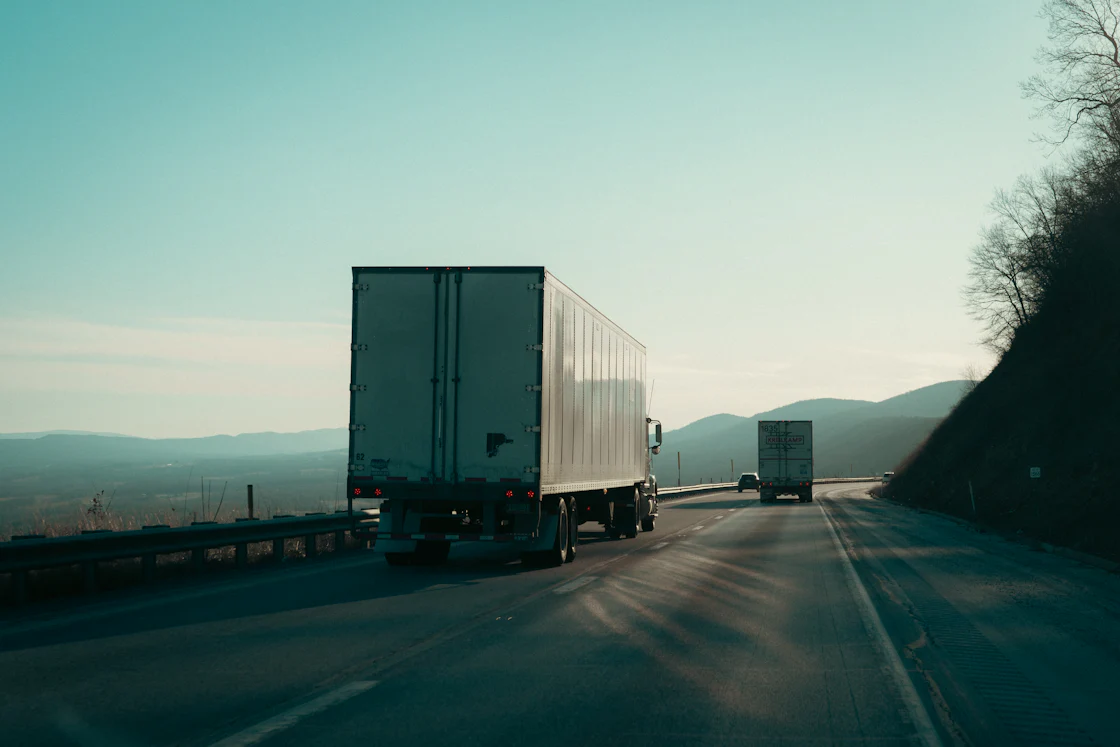
Full truckload, or FTL, means one shipper books an entire trailer. The truck loads at the shipper's dock, drives directly to the receiver and unloads there, with no terminal stops and no other company's freight on board. You pay for the truck and the distance, not for each pallet.
When should you book a full truckload?
- You have ten or more pallets, or enough weight to fill most of a trailer.
- The freight is fragile or high in value and should be handled as little as possible.
- Delivery has to happen on a set day.
- The load is tall, long or oddly shaped and won't combine well with other freight.
If you only have a few pallets and the date is flexible, LTL shipping will cost less.
How much fits in a 53-foot dry van?
A 53-foot dry van holds 26 standard 48 × 40 inch pallets in a single layer, loaded straight in 13 rows of two. Stackable freight can go two high for 52 pallets. Weight is usually the real limit: plan on roughly 43,000 to 45,000 lb when the load must meet the 80,000 lb gross limit used on US interstate highways.
| Loading pattern | Pallets (48 × 40 in) | Notes |
|---|---|---|
| Straight, single layer | 26 | The standard plan. Any forklift can load it. |
| Turned (pinwheeled), single layer | 28 to 30 | Possible with some pallets. Check with the shipper and receiver first. |
| Straight, double stacked | 52 | Only for freight that can carry weight on top and stays under the weight limit. |
Pallet counts are for standard 48 × 40 inch pallets. Tell us the total weight and whether the freight can be stacked so the load is planned legally.
LTL vs. full truckload
LTL is cheaper for a few pallets because you share the trailer, but the freight is handled at a terminal and takes longer. Full truckload costs more per trip and less per pallet as the load grows. It is faster and safer for freight because nothing is unloaded until delivery.
| Feature | LTL | Full truckload |
|---|---|---|
| Typical size | About 1 to 6 pallets | 10 to 26 pallets, or a heavy load |
| Trailer | Shared with other shippers | Yours alone |
| Route | Through a terminal, several stops | Direct from shipper to receiver |
| Handling | Loaded and unloaded more than once | Loaded once, unloaded once |
| Priced by | Weight, space and distance | The truck and the distance |
What we need to book your truckload
- Pickup and delivery addresses, with dock hours at each end
- Pallet count, total weight and whether the freight can be stacked
- What the freight is, including any dangerous goods
- The pickup date and the date it has to deliver
- Anything unusual: appointments, a required trailer type, driver unload
Full truckload FAQ
What is a dry van?
A dry van is an enclosed box trailer with no heating or cooling. It protects freight from weather and theft and loads from the rear at a dock. It is the most common trailer on North American highways and carries anything that does not need temperature control.
Is full truckload cheaper than LTL?
Per pallet, it becomes cheaper as the shipment grows. A few pallets cost less by LTL. Somewhere around ten pallets, or when the freight is heavy, the price of a dedicated trailer comes close to the LTL price, and the truckload arrives sooner. Ask us to quote both.
Do I have to fill the whole trailer?
No. You can book a full truckload for a partial load when you want the freight to travel alone, arrive on a fixed day or avoid terminal handling. You pay for the truck either way.
How much weight can a full truckload carry?
Plan on roughly 43,000 to 45,000 lb of freight in a 53-foot dry van when the load must meet the 80,000 lb gross limit on US interstates. The exact figure depends on the weight of the tractor and trailer and on how the load sits over the axles. Give us the total weight early.
Other ways to ship
Need a trailer to yourself?
Send the load details online or call dispatch at 647-677-0024.